
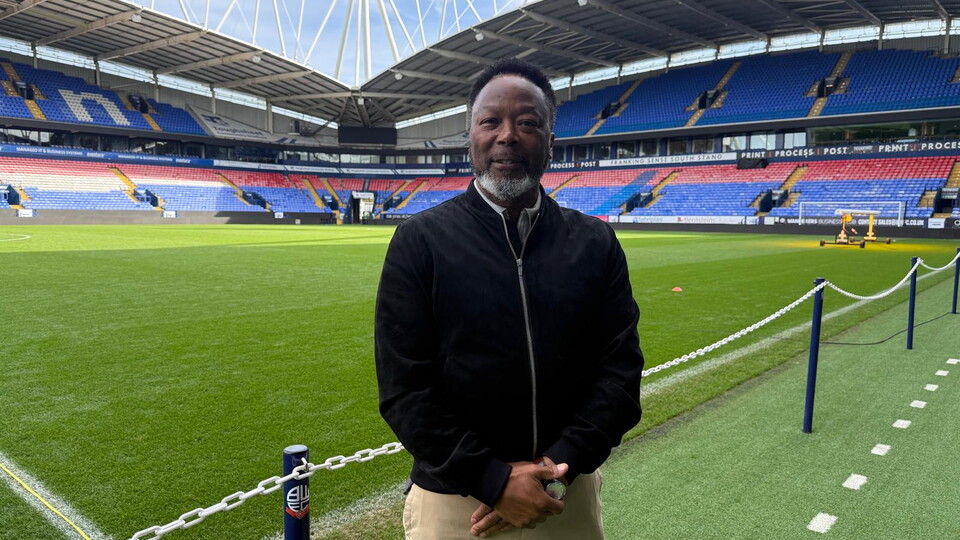
Black History Month has been marked in the UK every October since 1987. This October, as part of its Black History Month coverage, Bolton Wanderers is telling a story that, until now, has gone largely untold.
When the club approached Ed about the feature, it asked him to revisit those early years and to speak openly and honestly about what he experienced. He agreed because he believes those experiences form an important part of his story. Looking back now, he wants to acknowledge the difficult times without allowing them to define the whole of his experience at Bolton, or the person he became afterwards.
"Above everything else, family has always been the single most important thing in my life. The experiences I had in my younger years influenced the way I tried to conduct myself as I got older. I have always tried to lead by example: in my attitude, in the words I use and, particularly when working with children and young people, in the way I wanted them to see and understand me. That does not mean I have always got everything right. I haven’t. I have made mistakes, like everybody else. But I have tried to listen, to help and to support people when they needed it. Perhaps some of that came from knowing what it felt like when I needed those things myself and did not always feel that I received them. Looking back at Bolton, that is one of the things I sometimes wished I had experienced more of: not somebody to make things easier for me, but somebody to listen, to understand what I was going through and perhaps put a hand on my shoulder and say, “I understand.” - Ed Salmon
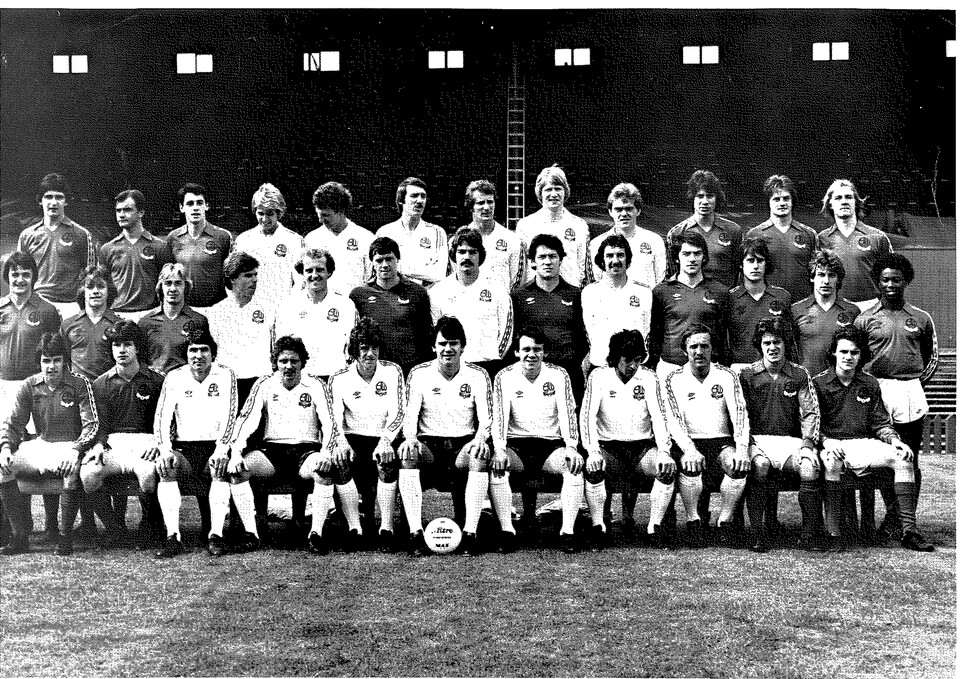
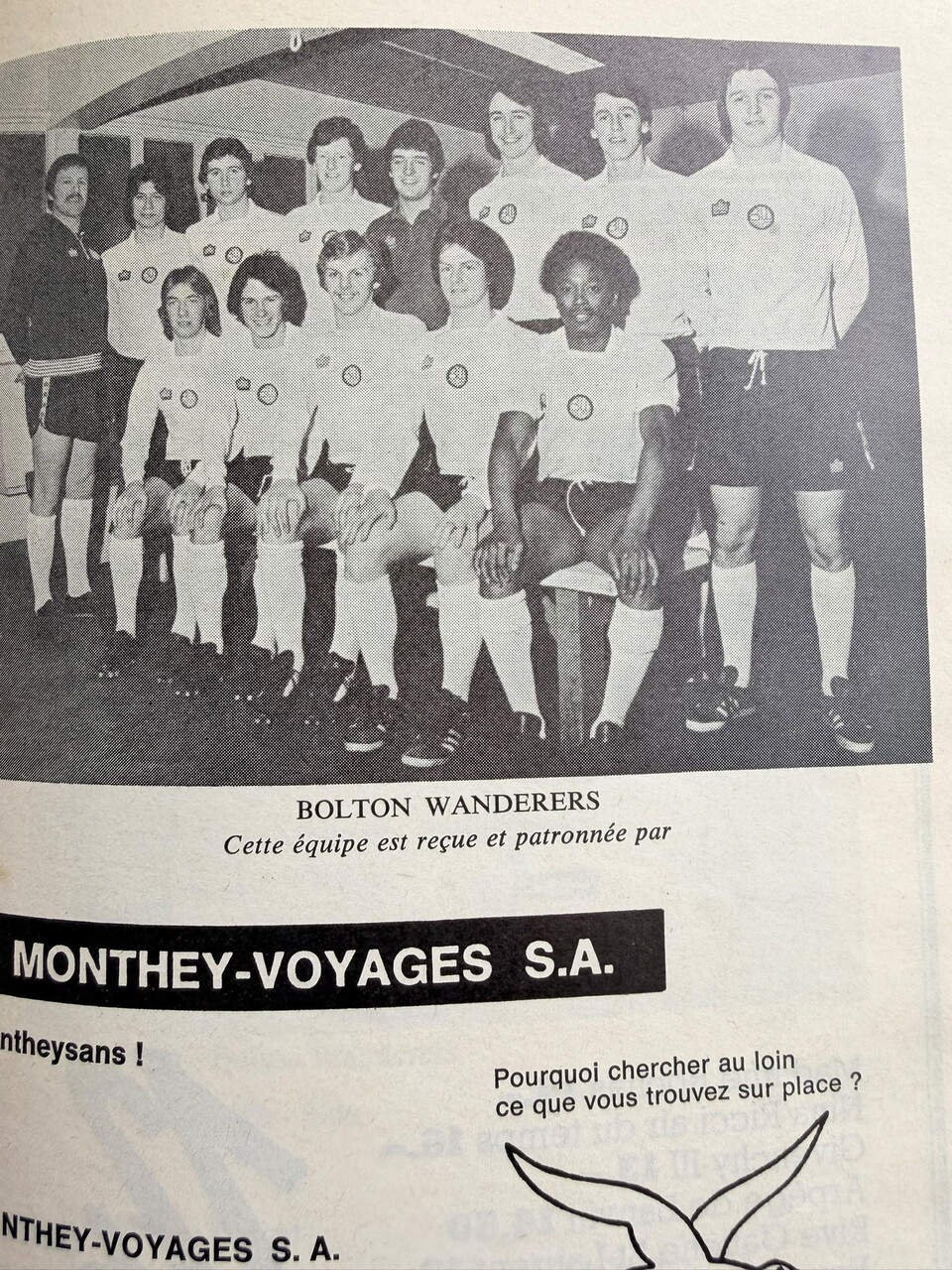
In some of Bolton Wanderers’ whole-club photographs from the 1970s, the first team wear white. At the front and at the sides, in red, are the apprentices, the teenagers still learning the trade. Among them in the 1976/77 season is a young man from Higher Broughton in Salford, born in Kingston, Jamaica. The club knew him as Colin Salmon.
Today he is 66 and goes by his middle name, Edward, or Ed. By his own estimate, nine in ten of the people he has met throughout his life never knew he had been a footballer. He was not one for telling them. “I never felt that it was important for people to know that I was once a player at Bolton Wanderers. That’s just the way I am,” he says.
A few years ago, thinking of his grandchildren, he decided it was time. “I wanted the kids and grandkids to actually know what I’d done,” he says. He searched online for the first Black player to represent Bolton Wanderers and found the name of George Oghani, a player he respected. “That didn’t feel right,” he says. “It was almost like my time at the club had been wiped from history.”
There was a practical reason, too. “Nowadays, the first thing people tend to do is go on the internet or check AI,” he says. “Is he lying? Is it this and that? So that’s why I made contact.”
He got in touch with Simon Marland, the club historian and honorary vice-president. Simon confirms that Ed spent two years at the club as an apprentice, from 1976. According to Simon, he is the earliest Black player so far identified in Bolton Wanderers’ records.
None of this changes George Oghani’s place in the club’s history. Signed from Hyde United, Oghani became the first Black player to appear for Bolton’s first team, in January 1984, and Bolton-born Roger Walker followed him into the side. Ed never played a first-team game. His story adds an earlier chapter, from the youth and reserve football of the 1970s, before either man arrived.
Ed has his own way of describing his life. “I was one of the first Black kids that attended Salford Grammar School. Oh, the first at Bolton… So I’m a series of firsts.”
It begins in Jamaica, with two small boys and their grandparents.
Jamaica to Higher Broughton
Asked when his family came to Britain, Ed’s first word was “Windrush”. His father went first. “My pops came across when I was a few months old,” he says. His mother followed. “My mum joined him when I was one.”
Ed and his older brother stayed behind with their grandparents. “We were brought up in the parish of St Elizabeth, in rural central Jamaica,” he says. “They looked after us until I was seven.” In 1966 the brothers followed their parents to England. “That was a year of England winning the World Cup as well,” Ed says.
His brother, about 18 months older, is called Junior, which has confused people ever since. “A number of times throughout the years I’ve said my brother’s Junior,” Ed says. “‘Oh, is he younger than you?’ Hear it every time.”
The family’s story followed a common pattern. Caribbean parents often travelled first, leaving children with grandparents until they could be sent for. The timing mattered. Ed’s parents arrived before the Commonwealth Immigrants Act began restricting arrivals from the Commonwealth in July 1962, but the law still allowed children under 16 to join parents already settled here. Arriving in 1966 makes Ed part of the Windrush generation, the Commonwealth citizens who settled in Britain between the arrival of the Empire Windrush at Tilbury in 1948 and the early 1970s. Between 1951 and 1961 alone, the number of Jamaican-born people living in England and Wales rose from around 6,000 to 100,000.
The family made their home in Higher Broughton, in a house Ed and his brother still own. Manchester’s Caribbean community was concentrated across the city, in areas such as Moss Side and Stretford. “There were only about three or four Black families in the area,” Ed says. “I kept a low profile, had to do what you had to do to survive.” He does not dress it up either way. “It wasn’t all bad… It was what it was.”
Never beaten
Football found him at primary school, where “all the kids played football”. He was about 10, and small for his age, but he had a gift. “I was an athlete even then,” he says. “Once I got the ball, nobody could get it off me.” It was instinctive. “It just came natural to me.”
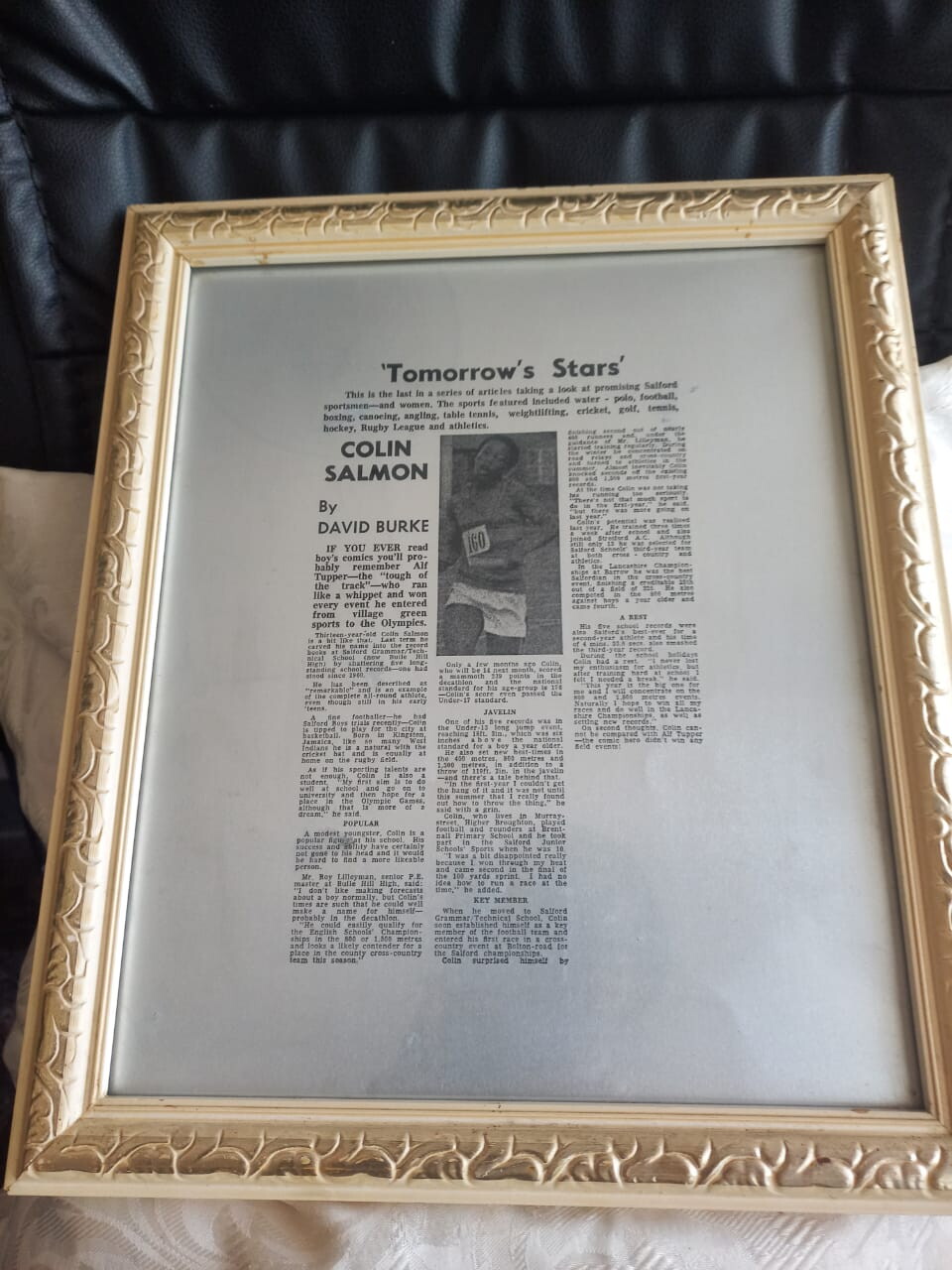
At the grammar school in Salford, he was “one of two Black kids amongst 800”, in a school where many pupils came from wealthier families. “I didn’t lose a race, cross country, middle distance, whatever, in the five years I was at school,” he says. Over 400, 800 and 1,500 metres and cross country, he remembers, nobody at the school beat him.
He trained on the streets around the school. “I was probably one of the only Black kids in that area where the school was,” he says. “Running the streets wasn’t accepted in those days.” He saw the funny side. “It was some good fun, because if anything happened, they’d never catch me anyway.”
A PE teacher, Mr Lilleyman, wanted him to take up athletics. Football won. Ed played for Salford and Greater Manchester Schools, and went to England trials with Ray Whelan, the English teacher who looked after the school’s football. He remembers Whelan’s mother putting them up overnight on the way. He was made deputy head boy, and a local paper, which he remembers as the Salford Reporter, ran a piece on him as a runner. He still has the cutting, mounted in bronze.
“I was winning every race that I was going into,” he says. “I was more or less winning every game that I was going into.” The schoolwork, he admits, “fell aside a little bit”.
By his mid-teens, professional clubs were interested. A Bolton scout, Frank Pickford, “Frankie boy” to Ed, saw him play for a Sunday side called Clifton. He remembers two players from the same club heading to Bolton too. “I thought, well, if they’re going down, I’m gonna have a go at it,” he says.
Bolton were not alone. Ed grew up on a street he remembers as home to three Black families, and one day a Jaguar arrived. “He comes in a Jag,” he says. The man at the door was the legendary Bobby Charlton, then managing Preston North End, and he wanted to take Ed to Deepdale. Charlton was Preston’s manager from 1973 until August 1975, so Ed was still at school.
Pickford made the case for Bolton. “You’ll be in the first team by the time you’re 17,” Ed remembers him saying. His mother’s argument was more practical. “It’s only on the number eight bus,” he remembers her saying. “You don’t have to stay over.” That decided it. It had been a quick rise. “Between kicking my first football and signing an apprenticeship,” he says, “six years.”
His parents backed him, even though football was not their world. “They were very, very supportive,” he says. “But don’t forget my parents had come from Jamaica and, like their peers, they had to work hard.” His father, Ashley, worked on the docks until he injured his back. Through an Irish friend of Ed’s mother, Norma, whose husband had a position at Kellogg’s, Ashley found work there, and he stayed for the rest of his working life. Norma, a skilled machinist, made goods to sell and took a pitch on Longsight Market in Manchester, where she worked for years until they both retired. “They were very proud,” Ed says. “There was a part of them that wanted me to take the educational route. But they could also see the football opportunity.”
His parents came to watch him play, and he remembers a youth match, before he signed, when the opposition went after him. He was quick and a playmaker in midfield, so they set out to stop him. He knows how the thinking went: “Put it through him. Scare him. He won’t go past you again.” A bad tackle went unpunished, and he got up and retaliated.
“By the time I looked round,” he says, “he was just standing on the pitch just behind me.” Ashley was not much taller than his son. “His instinct was to protect his son. He didn’t say anything,” Ed says. “But I always remembered that.”
Burnden, 1976
Before he signed, Ed started coming down to Bolton. He remembers “the gym at the side” of the main pitch, where they played five-a-side and fun games, and heading “under the flyover” to train or play at the training ground. Seeing Burnden Park was something else. “It was special to me,” he says. “How does this happen? How does this work?”
“Things changed when I became an apprentice,” he says. “Before that I was flying. And I didn’t have a care in the world.”
He joined as an apprentice in the summer of 1976, the heatwave summer that set the UK record for average daytime maximum temperatures, a record that stood until this year. He arrived at a club on the rise. Under Ian Greaves, Bolton had missed promotion from the Second Division by a single point that spring. They would miss out by a point again in 1977, reach the League Cup semi-finals the same season, and win the Second Division in 1978. In February 1977, in Ed’s first season, 50,413 people watched the semi-final second leg against Everton at Burnden Park.
For the apprentices, that summer meant work. “It was so hot that summer and we were lumping wheelbarrows full of sand,” Ed says. “We were like labourers.” He remembers contractors working on the stands. “There was a lot of activities going on, building wise, very little football.” The senior professionals, Sam Allardyce among them, would train and then, as Ed remembers it, head off to the pool hall up the road. Chores like these were part of an apprentice’s lot, a tradition the club’s historian traces back to the early 1960s.
“It was a shock to the system, but I had nobody to talk to,” he says. The club, he says, liked to present its young players as one big family. “But straight away it was clear to me that it was very competitive.” Apprentices came from Liverpool, the Midlands and beyond, and “you know that they’re there because they were eager to become first-team footballers”.
As far as he knew, he was the only Black player at the club, and he remembers no Black staff or workers anywhere either. From before he signed to the day he left, he does not remember playing against another Black player. “I didn’t have any Black people around and I didn’t think it would affect me,” he says. “But when things weren’t going well, from quite early on, it would have been comforting just for a hand on the shoulder, not just for me as the only Black boy but for any of my peers. Somebody pastoral wise, just to come and say, I understand, I understand.”
Many of the other apprentices lived in digs in Bolton and made friends there. Ed went home to Salford. “That made me feel even more… isolated,” he says.
On the pitch
At the club, he remembers, he moved from central midfield, where he had played as a youth, to mainly the right of midfield, and occasionally the centre, “depending on how much running needed to be done”. He had pace and stamina. “I could run like the wind,” he says. “I had an engine on me.” That was how he was used. “I was like a runner. I didn’t get to actually play as much football as I would have liked. If given the opportunities, I am confident that I would have done better.”
Then there was what he heard. “On more than one occasion I heard one of the coaches say this,” Ed says. “Black players don’t think. They’re not there to think.”
“It wasn’t immediate. It was years afterwards, through reflection and further experience away from football, that I truly understood how those words impacted me at the time. It was very much a cumulative process that wore me down,” he says.
A decade later, the sociologist Joseph Maguire found that Black players in English football were being assigned to positions on the basis of racial stereotypes about their abilities.
Away games brought something else. “I did get bananas thrown onto the pitch at some of my games, and the chanting and all that,” he says. “To my recollection, I didn’t get any backup from my team-mates or the coaching staff. It was more like, come on, roll your sleeves up, get on with it, you’ve got a job to do.” It stayed with him. “That affected me more than I thought it did.” He learned to be careful off the pitch, too. “I felt I had to take extra care travelling to and from the stadium,” he says. “Just being aware of my surroundings.”
Ed’s account echoes what Black professionals of the era have said. Brendon Batson remembered monkey noises in the compact Fourth Division grounds where he played before joining West Bromwich Albion, and at Upton Park someone threw a bunch of bananas at his team-mate Cyrille Regis. Viv Anderson, who in November 1978 became the first Black player to win a full England cap, remembered fruit being thrown at him at Carlisle. Racist chanting at football matches did not become a specific criminal offence until 1991.
Ed thinks one or two more Black players, or Black faces around the club, might have changed things for him. “You would have had natural allies there, to share the load,” he says. The abuse might then have been, in his words, “water off a duck’s back, instead of the ‘chip on the shoulder’ response I would probably have had if I tried to speak to anybody about my feelings”.
He will not let the difficult, challenging times stand for the whole. “Don’t get me wrong, I had some fantastic times,” he says. “And it was always good when you put the shirt on.” Asked how it felt the first time, he says: “I can’t describe it. Regardless of what was going on, it was good.”
He remembers a European youth tournament against Bayern Munich “and a lot of the top clubs”, and thinks he still has a photograph of it somewhere. “So that too was special,” he says. “It’s always special to play for a pro club. Because that was the aim. And I remember it fondly.”
“I’ve also got the realism,” he adds, “that at that time it was tough.” But he is clear about the balance. “When you’re amongst a group of young men, you’re going to have good times,” he says. “It wasn’t that I was sitting in a corner feeling sorry for myself all the time.” And: “I hope that’s not the picture I’m painting.”
With the benefit of hindsight, Ed says the experience also taught him lessons that stayed with him throughout adult life: to distinguish between the things he could change and the things he could not; to reflect rather than simply react; and to look for solutions where he could. He came to place particular value on respect, trust and loyalty. The experience shaped the adult he became.
The ladder
What wore him down was the ladder. “I saw some of my peers progressing up the ladder,” he says. He remembers David Burke becoming a regular in the reserves. Chris Thompson made his first-team debut in October 1977, while Ed was still at the club; Burke and Mike Carter made theirs in the seasons that followed. “They were making it, and my progress was static,” Ed says.
His confidence drained away. “I didn’t know how to break out of the mindset I got into,” he says, “and eventually, my reaction to the situation was, ‘whatever happens, happens.’”
The end came after two seasons. “I was absolutely gutted,” he says. It was no surprise, he adds, because by then his confidence had been eroded. He had joined the club two years earlier full of confidence in his ability, with high hopes and a desire to make it. The person who left, he says, was a different one, with a lot of rebuilding ahead of him.
He offers no single explanation. “I was privileged to have had that experience at Bolton,” he says. “It didn’t turn out how I wanted it to. I don’t feel it was my fault, but maybe I wasn’t good enough. Maybe the breaks didn’t come. Maybe I was in the wrong environment, maybe this, maybe that, but that’s all in the past. It’s in my history.”
“I didn’t really want to go to another club,” he says. “Months later, I was walking through Manchester and saw the Royal Navy recruitment offices.”
Part Two, Beyond Burnden, follows next week.