
Two years ago, Heather Bluer could not walk across a room. Today she can watch her son, Seb, play football.
Heather, a lawyer from Bolton, received a double lung transplant at Wythenshawe Hospital in June 2024 after a genetic condition left her bed-bound and, at points, given 48 hours to live. As National Organ Donation Week gets under way this week, she has shared her story with Bolton Wanderers in the hope that it persuades people across the town to register their decision to become an organ donor.
Heather lives in Bromley Cross. She was prone to chest infections as a child and as an adult she was diagnosed with Alpha-1 antitrypsin deficiency, a genetic condition that can affect the lungs and the liver. The full impact of it arrived after the pandemic.
"I shielded very strictly in lockdown," Heather said. "Once it had passed and I began to socialise and reintegrate, I started having what we thought were panic attacks.
"I'd have them in the supermarket, for example. I felt as though I couldn't breathe, and I assumed they were being brought on by challenges I was having in my personal life and the shock of reintegrating to society. I had been losing a lot of weight and became very unwell, almost crippled by anxiety, to the point where my boss told me to take some time off and seek medical advice."
Heather was initially treated for anxiety and depression. She got worse.
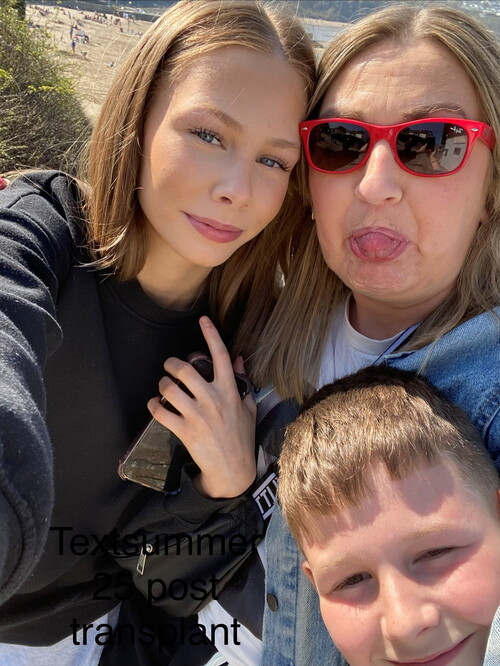
"I told my GP I didn't feel it was a mental illness. I actually said to him, I'm dying. I refused to take any more medication and insisted on further tests.
"After getting a heart scan, by which point I hadn’t left the house for 8 weeks, I was in a wheelchair because I could no longer walk from the swelling or breathlessness, they told me the right-hand side of my heart was enlarged and leaking. They took my sats, which were so low they were not compatible with life. I was immediately admitted, put into a bed and linked up to various machines and oxygen.
"The panic attacks hadn't been brought on by stress or anxiety. It was because I was so physically unwell. My oxygen levels were so low that I actually couldn't breathe, which made me panic."
Doctors agreed that a double lung transplant was necessary and that if it succeeded, with medication her heart could repair itself. Over the following two years her health declined sharply. She became completely bed-bound, with carers for 18 hours a day, while raising her two children.
"A couple of times I was given 48 hours to live," she said. "I will never forget the feeling of each day wondering, will today be the day I die. Every day was just a case of ticking another one off.
"It was also horrendous for my family and friends. As amazing as they are, they could never fully understand just how it feels to fight for every breath and think, is this my last."
Then, at 2.15pm on 19 June 2024, the call came. A donor had become available and Heather needed to get to Wythenshawe immediately. By 5am she was in surgery.
"All I remember is the call and then coming round in the intensive care unit to a nurse saying my name and asking me to open my eyes," she said. "It was a really strange feeling. I questioned whether I was actually alive or had instead died. But there was also an overwhelming feeling of guilt. Somebody had to die for me to live. I carry that with me to this day.
"Somebody said to me at the start of the journey that you become part of the transplant family and I only now fully appreciate it. You absolutely do. They're there for the ups and the downs, holding your hand, wiping your tears, pushing you. They're not just doing a job. It's clear they genuinely care."
A transplant is not a cure, it’s a treatment. Heather takes medication for life, can never be late with a dose, faces regular hospital trips and various side effects and other conditions as a result of the high levels of medication.
"It's a lifelong commitment to a new normality, but a very small price to pay for life," she said. "What it has given me is a greater value of the little things. Until recently I had never seen my son play football. I can take my daughter shopping. I can see family and friends without them being my carers.
"More importantly, I get to see my amazing children grow up and see milestones I never thought possible. I get to be a mum again. Two years ago I never would have thought this possible.
"I am alive, and this is thanks to not only the amazing team at Wythenshawe but the incredible gift of life from my donor and their family. These are debts I can never begin to repay.
"I tell my story not for sympathy or pity, but to raise awareness of the amazing job the transplant unit do, and to raise awareness of organ donation. If someone reading this can save just one life, it's worth doing."
Register your decision
National Organ Donation Week runs from Monday 21 to Sunday 27 September. You can record your decision on the NHS Organ Donor Register in two minutes at organdonation.nhs.uk.
Whatever you decide, tell your family. Your family will still be consulted before organ donation goes ahead and knowing your decision makes it far easier for them to support it.