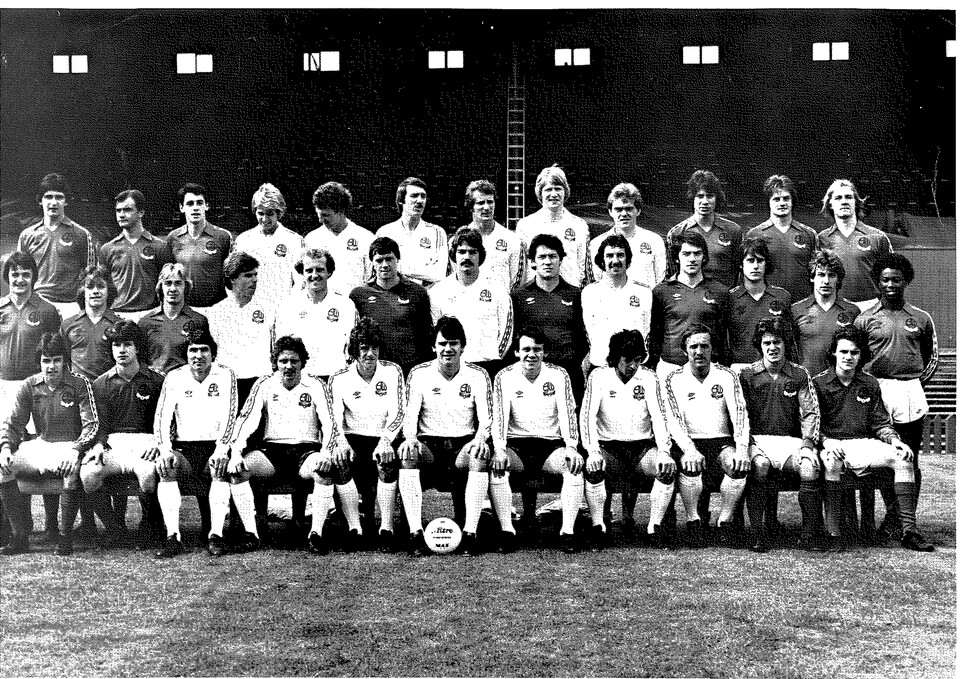

Released by Bolton, Ed Salmon walked into a Royal Navy recruiting office on impulse. A few years later he was serving on a frigate sent to the Falklands. Part Two follows him from the South Atlantic to a junior football club in Sale, and back to Bolton Wanderers.
| This is the second of two parts of ‘A series of firsts’, Bolton Wanderers’ Black History Month feature on Ed Salmon. In Part One, Ed told the story of his childhood in Jamaica and Salford and of his two seasons as a Bolton Wanderers apprentice from 1976. Known then as Colin, he never played for the first team. George Oghani became the first Black player to appear for it, in January 1984. According to the club historian, Simon Marland, Ed is the earliest Black player so far identified in Bolton Wanderers’ records. Ed looks back on those years with the perspective of a lifetime, recognising both what was painful and what he learned from it. The resilience and reflective approach he developed stayed with him for the rest of his life. |
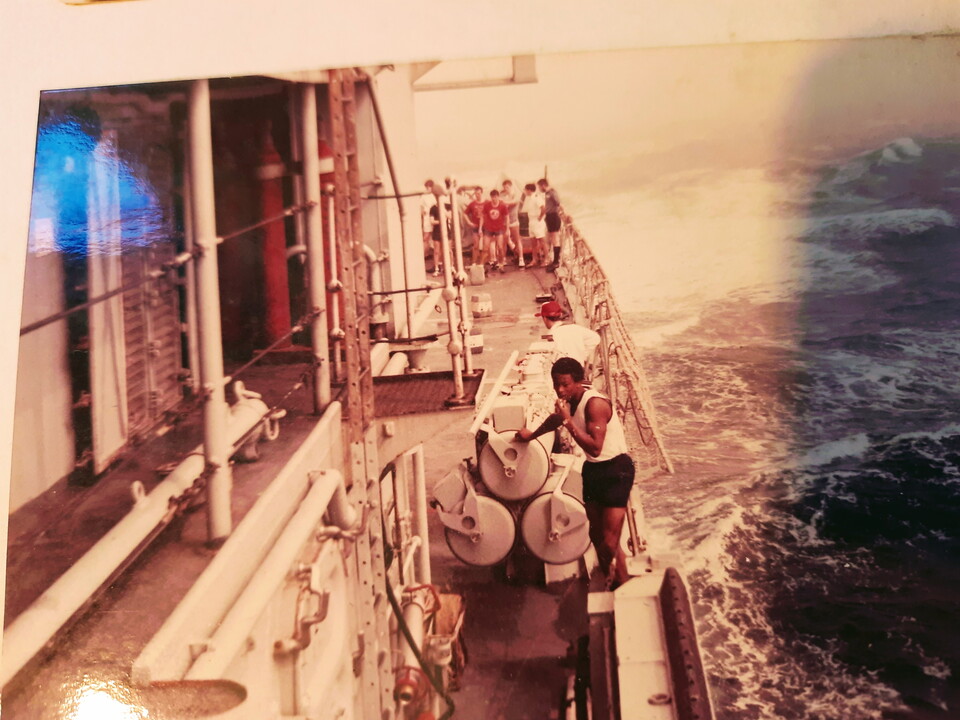
Ed Salmon remembers the bridge of HMS Minerva in the South Atlantic in 1982. He was the ship’s physical training instructor, and in peacetime, he says, keeping the crew fit was his whole job. War changed that. “The PTI on board, because there’s only one, would be on the bridge with the captain and his team of officers and engineers,” he says. “My job was to steer the ship.”
“Nowadays you just press a button,” he says. In rough seas, he held on tight. “You gripped it all the time.” The swell was kinder. “When it’s a swell, it just gently takes you.” Each watch ran for six hours, followed by six hours off. “On your six hours off, you would be expected to do everything else, such as wash your clothes, have your dinner, have a little bit of banter with the lads in your mess or whatever,” he says. “And then get your kip. Before you know it, you are back up there on watch again.”
As the ship’s PTI, he says, his responsibility went beyond physical fitness. During a war deployment, he also had a role in helping to keep the ship’s company occupied, engaged and as positive as possible. He organised activities and competitions where circumstances allowed, helping to maintain a sense of normality and togetherness in an environment where uncertainty was never far away.
The Navy had never been the plan.
Impulse
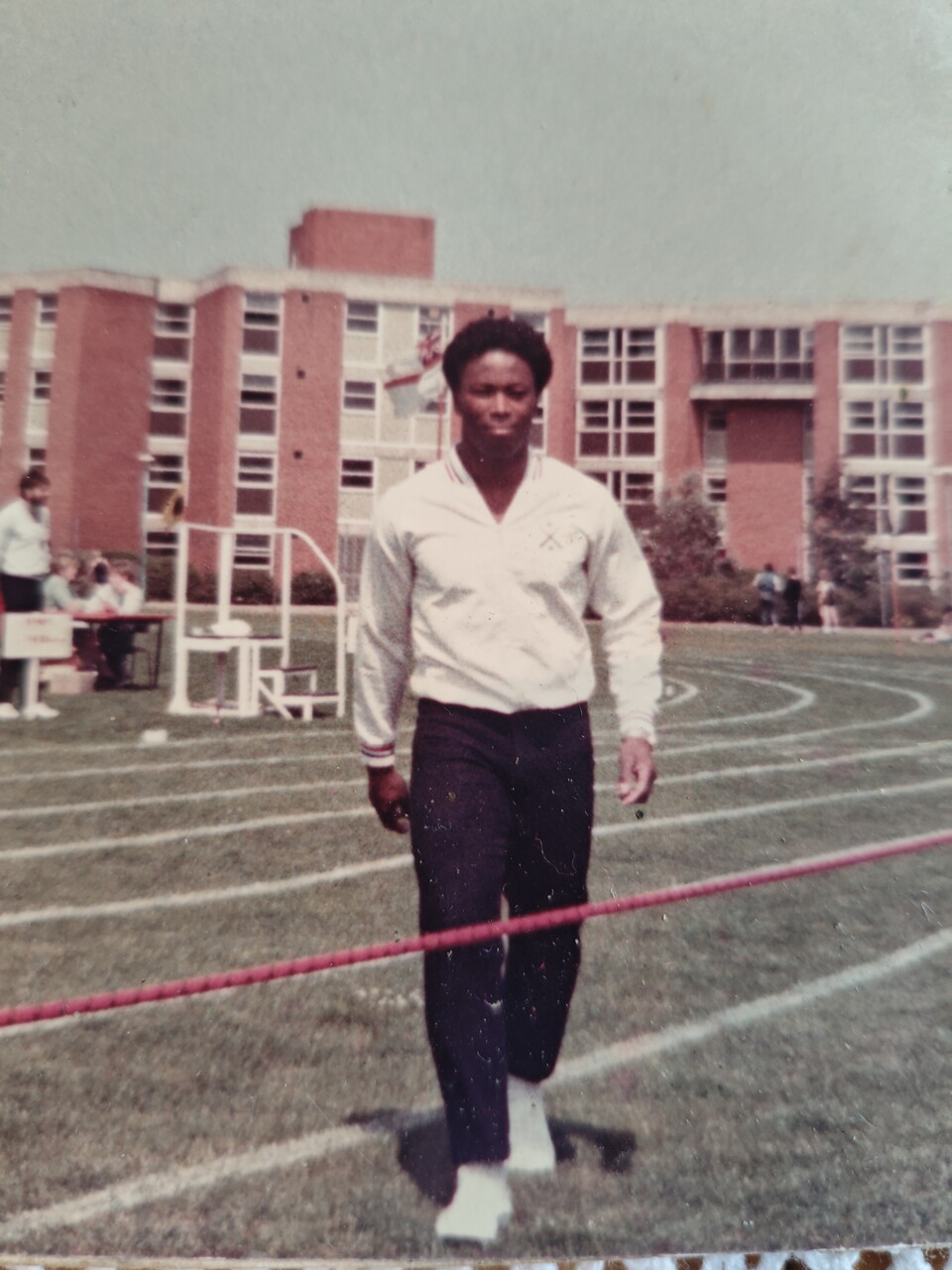
After Bolton released him, Ed did not want to join another club. Months later, walking through Manchester, he passed a Royal Navy recruiting office. “Impulse,” he says. “I found myself walking in because things were rough for me at that time.”
He did not know what came next. “What am I gonna do? Should I have gone to college?” Nor did he have the energy, he says, to go back into education two years behind his peers.
The recruitment process included tests in maths and English, and he remembers scoring in the high 90s. “Because I’d lost so much confidence, I just wanted an easy life, so I did not consider the offer to join up as an artificer, a technical engineer,” he says. “I felt the easiest life would be something to do with sports. I learned that they had a Physical Training Branch.” He told the recruiters what he wanted. “If I’m to go in the Navy, I want to be a PTI as fast as possible. They actually agreed.”
Initial training was at HMS Raleigh, the Navy’s new-entry training base at Torpoint in Cornwall. “There weren’t many Black lads that I remember in my initial training,” he says. “That came later.”
During his initial training, he remembers, football came looking for him again. His commanding officer called him into his office, with his parents on the phone. “He says he’s received a notice,” Ed says. The Los Angeles Aztecs of the North American Soccer League wanted to give him a trial. “I recall that George Best had been a player the previous year,” he says.
The Navy offered to hold his place. “If it doesn’t work out you can come back and pick up where you are,” Ed remembers being told. He turned it down.
“I’d lost confidence,” he says. “I just didn’t want to risk it.” Racism was part of the reckoning, too. America, he says, “was quite bad with racism”. His answer was: “No, I’m staying where I am.”
His commanding officer “couldn’t understand it”. “He didn’t have a clue,” Ed says. He had not talked about Bolton, where, as he says in Part One, there were good and bad times. His parents were not surprised. “They didn’t know much about what had happened at Bolton. They just knew that I had changed, that my mood was low and my confidence wasn’t as it was,” he says. “I didn’t tell anybody.”
He stayed. Within 18 months he had completed his mandatory Part 1 and Part 2 training and his PTI course at HMS Temeraire, the Navy’s physical training school in Portsmouth, and was back at HMS Raleigh, this time as a physical training instructor. To his knowledge, nobody had reached PTI status faster in their service career.
South Atlantic
For Ed’s generation, he says, racism ran through “all aspects of life”. “It all boiled over in 1981,” he says. That April there was rioting in Brixton, and in July in Manchester’s Moss Side and in other towns and cities across England. By then he was in the Navy. “It was a difficult time for most communities, but I felt as though I was sheltered,” he says. “It was a difficult feeling to own.”
The following spring, Argentina invaded the Falklands. On 4 May 1982 an Exocet missile hit HMS Sheffield, killing 20 of her crew. One of the lads who had joined up with Ed was on board. “I didn’t know him that well, but it was devastating news, knowing that he went down,” Ed says. “That’s what I remember of it.”
Then came the call. “Our ship was on notice to relieve the first,” he says, meaning the task force already in the South Atlantic. Minerva, a Leander-class frigate, sailed from Devonport on 10 May with a group of reinforcements that included the destroyer HMS Bristol, and reached the war zone in late May. The Argentine forces surrendered on 14 June.
“It was more or less doing the job that I’d signed up to do,” he says, though it was not what he had expected. “You didn’t have time to think about yourself. Doing my job was what was important.” Some of the preparation covered how to survive aspects of nuclear and biological warfare. “Scary,” he says. “Any simple mistake that you made when you’re on board a ship affects everybody. That’s what it was like aboard. We’re all in it together.”
Even though, he says, he was the only Black person on board, the isolation he had felt at Bolton did not follow him. “As a PTI I was in a position of leadership,” he says. “People had a healthy respect for PTIs.” PTIs pushed the crew hard, he says, and themselves too; they led by example. “So I was in a position where racist behaviours towards me just didn’t happen.”
The sea was its own trial. “At times it was that rough. I almost had to have a bucket around my neck full time,” he says. “I wasn’t the only one. Seasoned sailors were also challenged by the rough seas.”
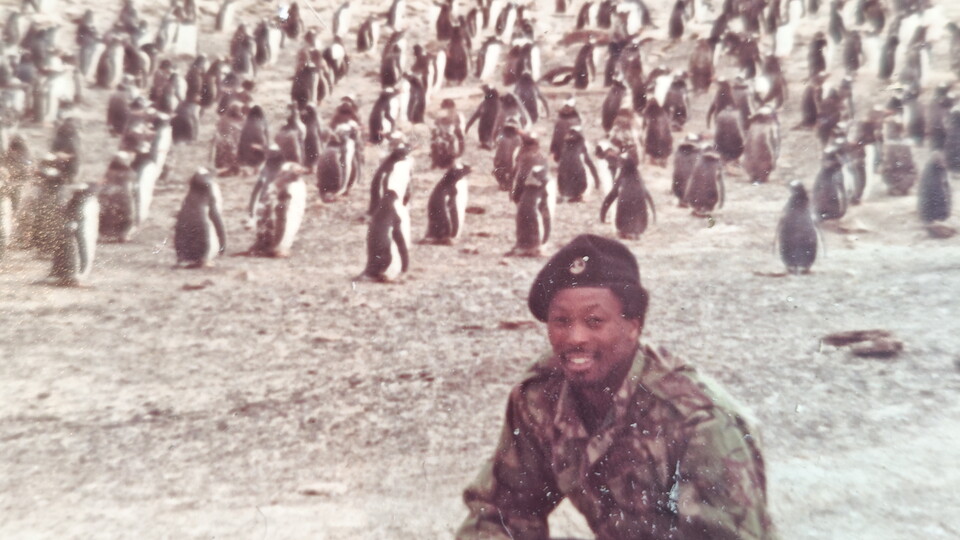
He has a photograph from his Navy years with, as he puts it, “about a million penguins behind me”. “That’s an iconic photo, actually,” he says.
The deployment, he says, was “proper brotherhood”. Even so, “we had to send a couple of crew members home,” he says, because of mental health and stress.
He made two close friends in the Navy, Vince from Manchester and Tony from Leeds. “They became my best buddies,” Ed says. One day Tony asked Ed to meet his younger brother, who was visiting and played for his town team. Ed remembers a tall, quiet, polite lad. Tony’s younger brother was Brian Deane, who in August 1992 scored the first goal in Premier League history. “Now, that’s what I call truly historic,” Ed says.
Ed served eight years, leaving a year or so after his first child was born: “I need to be with my family.”
Civvy street
After the Navy, he stayed in sport. He became leisure manager at the Holiday Inn in Croydon. The hotel provided live-in accommodation for him and his young family until he found a rental property. Crystal Palace were close by, and Ed remembers their players coming through the hotel, among them a young Ian Wright, who had signed from Greenwich Borough in 1985.
Next, he moved to East Anglia to manage a local-authority leisure centre in Ipswich, in an area where, he remembers, many residents came from the African-Caribbean community. His son was born in Ipswich. His wife was getting homesick, and the moves were adding up: by the time their daughter was three, the family had lived in several different places. Asked whether he met barriers in civilian life, he says: “Oh, God, yeah, I’m not unique.” He points to Ipswich. “We were in Ipswich, two young children, with no family support, and I spent many hours at work. Despite this, sometimes we didn’t know where tomorrow’s meal was coming from,” he says. “No, I’m not unique. This was part of life for many families at the time.”
After about 18 months, the family came home to Manchester, and Ed spent about ten years running the leisure facility at the Crowne Plaza Midland Hotel and advising other leisure clubs in the group. “The Manchester stability was welcomed,” he says.
Then, as he puts it, “Bobby Charlton comes into my life again”. Charlton and Ray Whelan, Ed’s old football and English teacher at the grammar school, were opening a fitness centre at Hopwood Hall College in Middleton. “So they enticed me to join them, set it up and manage it.” The plan was to develop a chain, “but again it was too early for me,” he says. “Fitness chains became more prominent years later.” It did not last. “Two, three years down the line, it didn’t work out. So, unfortunately, I was made redundant, despite the success of the Bobby Charlton Summer Schools at the site.”
In his late 30s, he gained his teaching qualification through a part-time university course. “I hadn’t gone down the professional route like most of my peers from school, which I was capable of doing,” he says. “So it was frustrating that I was bright enough to have gone down a professional route, but by the time I’d come out of football and naval routes, I couldn’t then drop everything.” He kept studying, and later spent four years qualifying as a counsellor. “In total I must have undergone about 10, 12 years’ worth of night and part-time education courses,” he says.
He spent about ten years managing training providers’ apprenticeship contracts for Manchester Enterprises, then moved to Manchester City Council’s education services, specialising in education, employment and training for young people aged 16 to 25. It was rewarding work.
Giving back
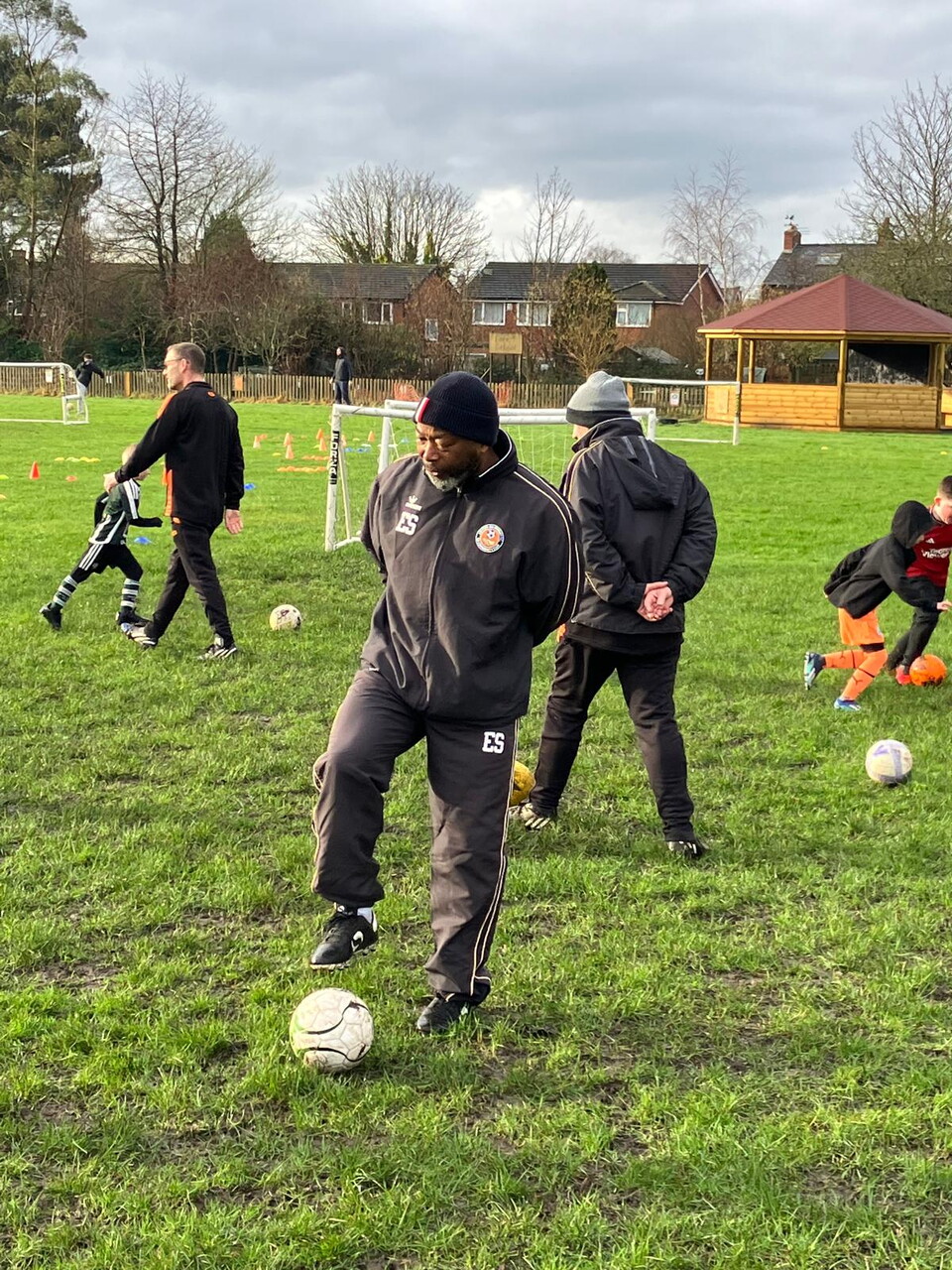
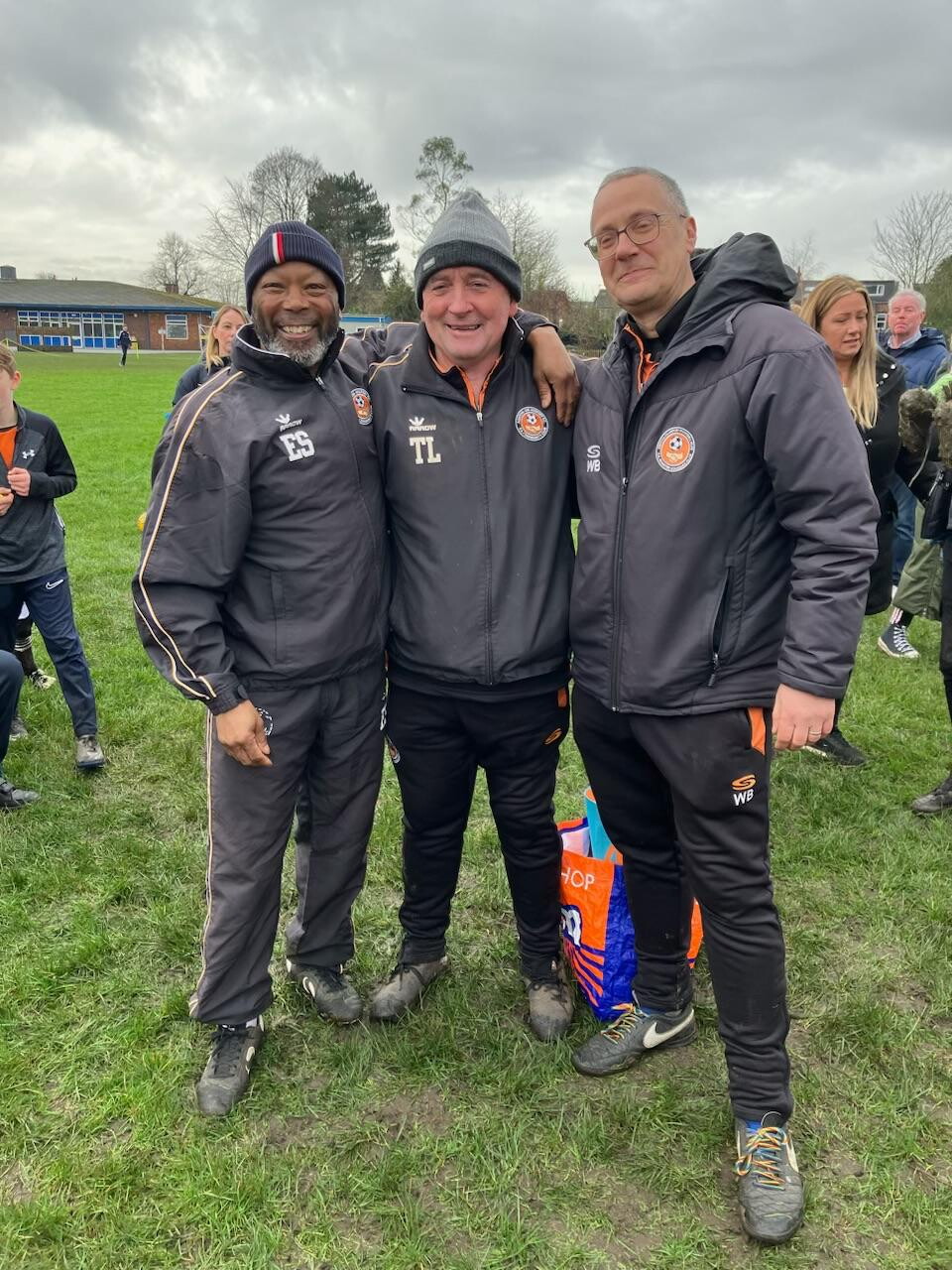
Football came back through another friend. Tony Lowe, an ex-army man, had started a junior football club in Sale with about 16 children on a school field, and needed someone with a coaching qualification to help him. “I said I’d help him for a few weeks until he found somebody,” Ed says, “20 years later.” The club’s own history dates its start to 1993, when Tony Lowe began a coaching centre at Wellfield Junior School. It became Ashton-on-Mersey Junior Football Club in 1997, and since 2023 it has been part of Ashton-on-Mersey Sports Club.
Sale is, in Ed’s words, “fairly white, affluent”. He became chairman, he says, and stayed for more than 20 years. “We grew from 16 to nearly 500 children and young people,” he says. The club has kept growing since he retired about seven years ago. Will Blandamer succeeded him as chairman, and the two are still in regular contact. The club’s website now lists more than 70 teams and 900 members. Ed and Tony Lowe remain firm friends, and both, he says, are lifetime presidents.
“Since leaving Bolton Wanderers, it became a case of acknowledging that I’m not going to live off the past. I’m going to live for the future,” he says. “So hundreds of kids came through the club. And 20-plus years, giving back.”
That outlook reflects something Ed says he learned much earlier. He could not change everything that happened to him, but he could decide what he did with those experiences. Over time, resilience, reflection and a determination to find constructive solutions became part of his approach to life and work. Respect, trust and loyalty became values he carried into his relationships, his work with young people and his leadership in the community. In Part One, he describes wishing that someone at Bolton had listened and put a hand on his shoulder. As a coach and chairman, he tried to be that person for others.
A series of firsts
Asked whether he kept in touch with anyone from those years, he says no. “The sad thing about it is I was one of the first Black kids at the grammar school,” he says. “So I’m a series of firsts.” For years, he did not stay in contact with anyone from school. “It’s strange. I just moved on, until a couple of years ago an old school friend, Allan, contacted me. We talk about football matters most weekends now.”
Years later, he did meet George Oghani, who joined Bolton in 1983, five years after Ed had gone. Ed remembers Oghani the footballer. “He was a tough and talented lad,” he says. “You couldn’t mess with George, could you?”
It was his grandchildren, and the online search described in Part One, that brought Ed back to the club. He contacted Simon Marland a couple of years ago, and he wants to do more than tell his story. “I’d love to get involved in some sort of way,” he says.
He would like to bring his son and grandchildren to a game and the club has invited them. “I’d be quite proud to show them,” he says.
In Simon Marland’s photograph, the teenager in red is still there.